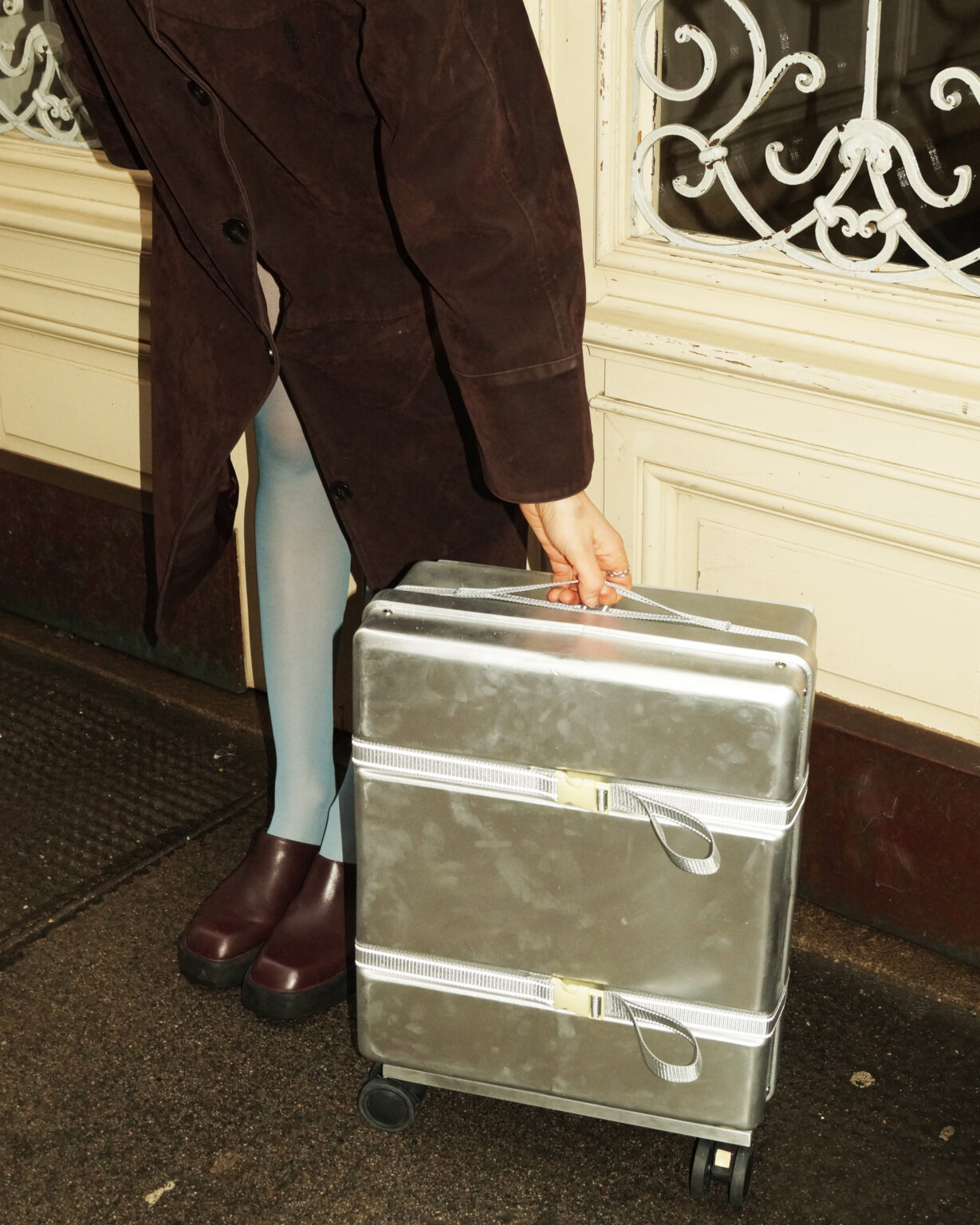
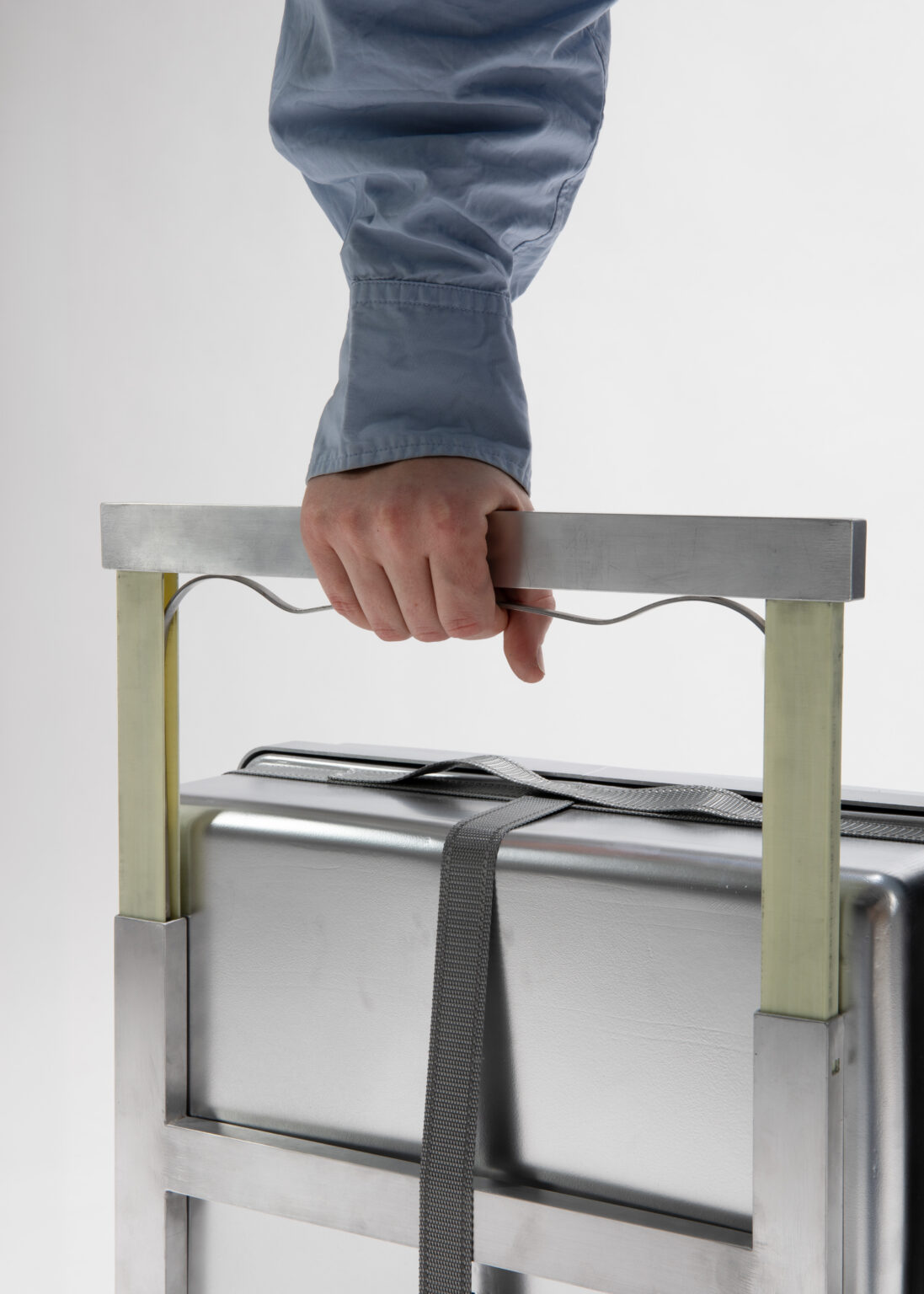
„travel box“ is a suitcase concept that rethinks how luggage is built, used, and handled at the end of its life. Conventional suitcases are complex composite products that often fail due to small broken components. Because these components are permanently connected, repair is rarely accessible and the entire suitcase is frequently discarded instead of maintained.
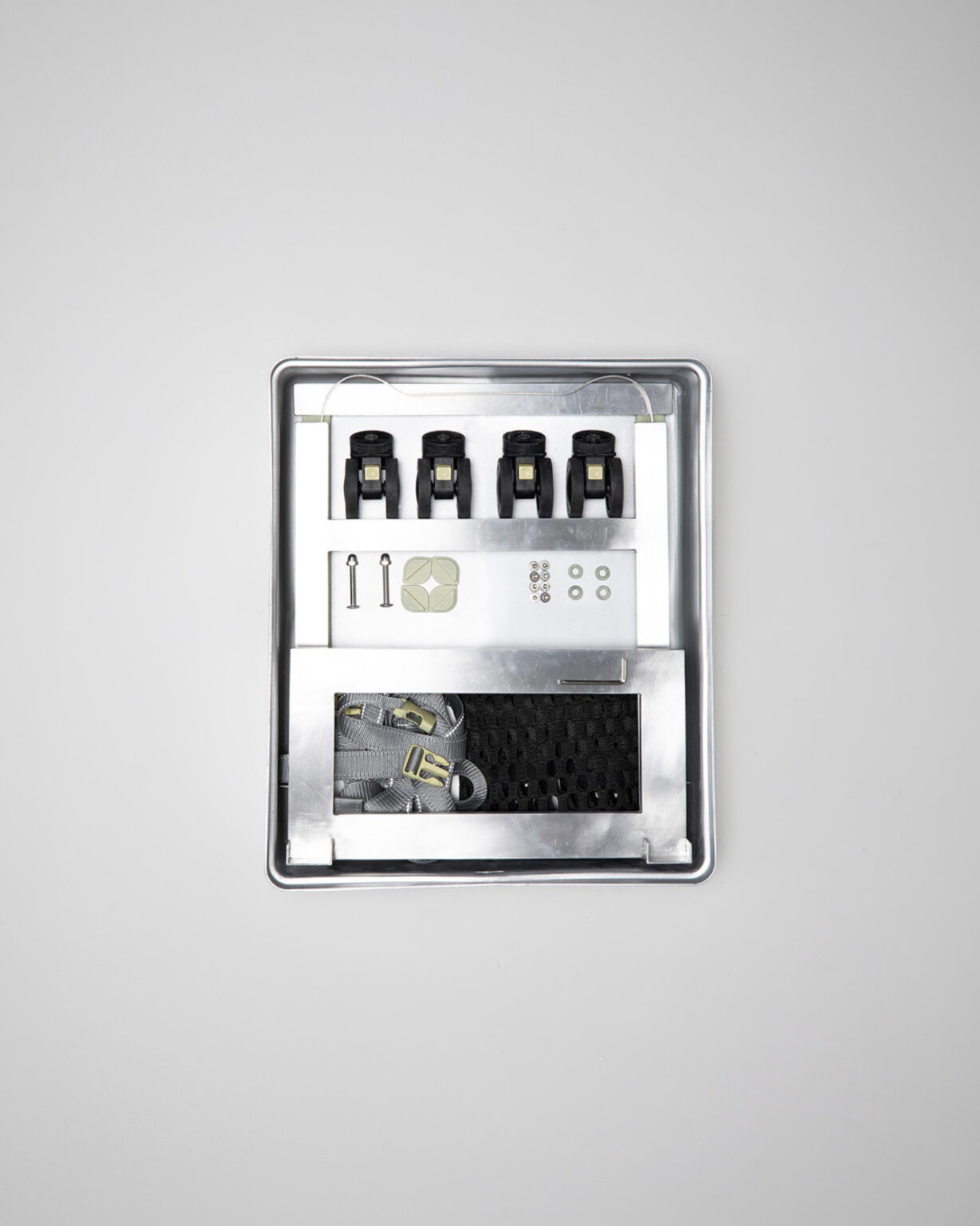
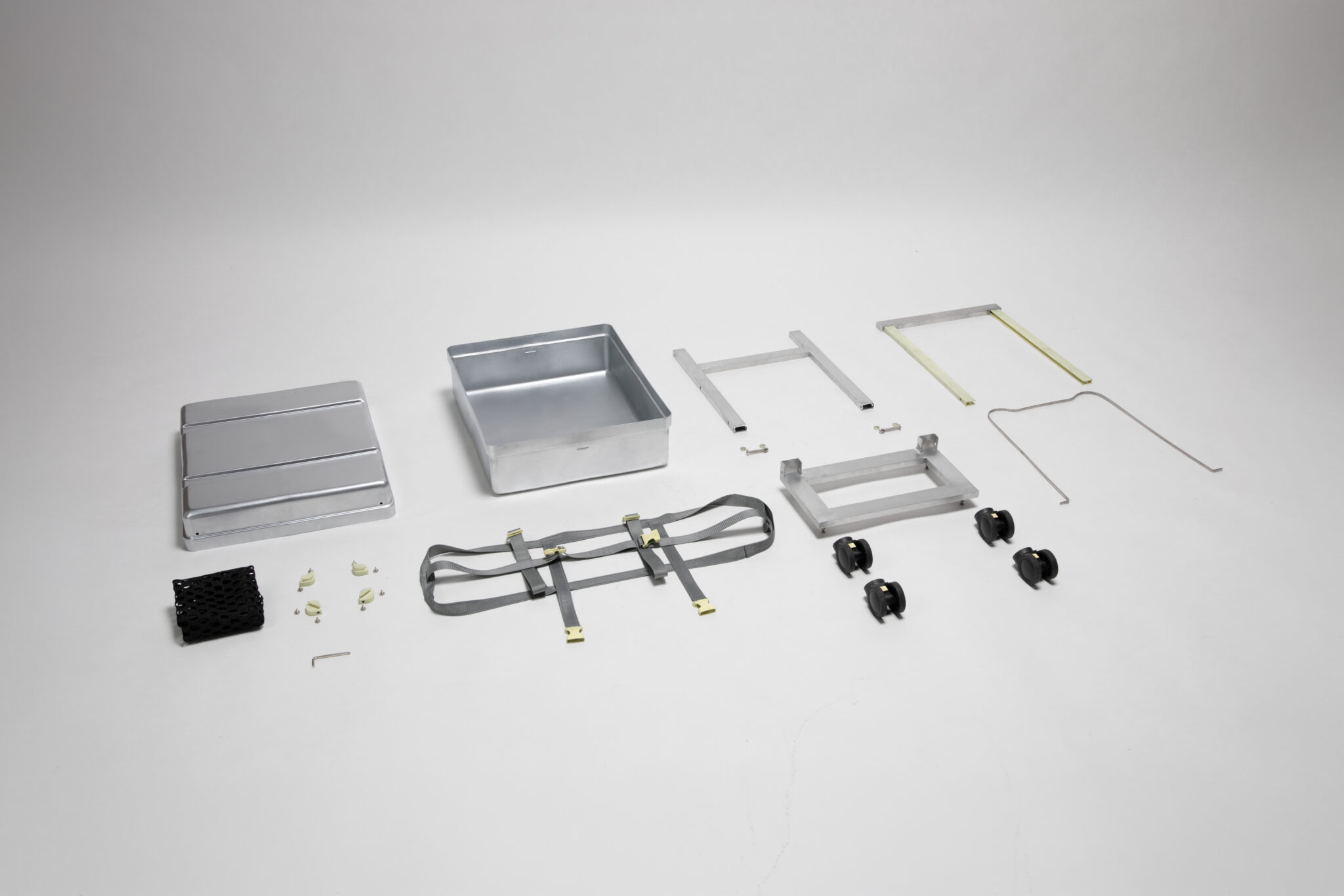
The core idea of Travel Box is to let the customer assemble the suitcase themselves. This assembly process is an intentional part of the design: it helps users understand how the different components are connected, how they can be separated at the end of the product’s life cycle, and how individual parts can be replaced or repaired.
By revealing its construction instead of hiding it, the suitcase becomes more understandable, serviceable, and valued. This makes disposal a last option rather than the first response.
Shifting the assembly process to the customer also has a significant impact on production. Assembly is a major cost factor in conventional suitcase manufacturing, and by reducing this step, production costs can be lowered. These savings make it possible to use higher-quality materials, allowing an aluminum version of the suitcase to remain affordable and competitive in price with conventional plastic suitcases.
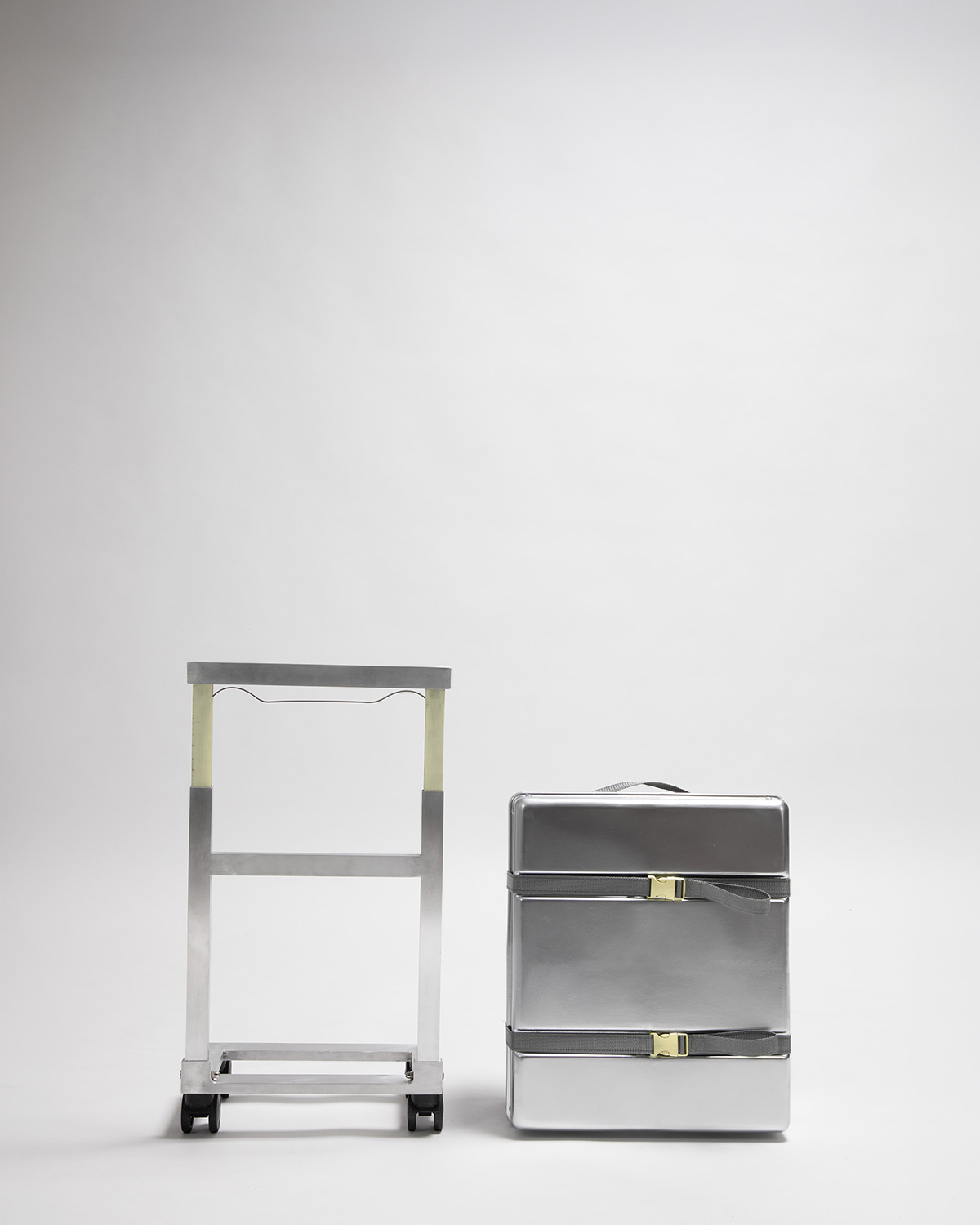
The suitcase is designed with simple and intuitive connections, in contrast to traditional suitcase construction. Conventional hard-shell suitcases typically rely on rivets, glue, screws, or a combination of all three to achieve stability and security. At the same time, plastic shells are kept very thin to reduce weight, which means that even high-quality suitcases can crack or break under stress. Travel Box avoids these irreversible connections and instead uses a construction that remains accessible and understandable throughout its lifetime. To secure the case, safety belts are used rather than permanent fasteners. This makes the suitcase intuitive to use while providing a level of security comparable to textile suitcases or zippered designs, without compromising disassembly and repair.
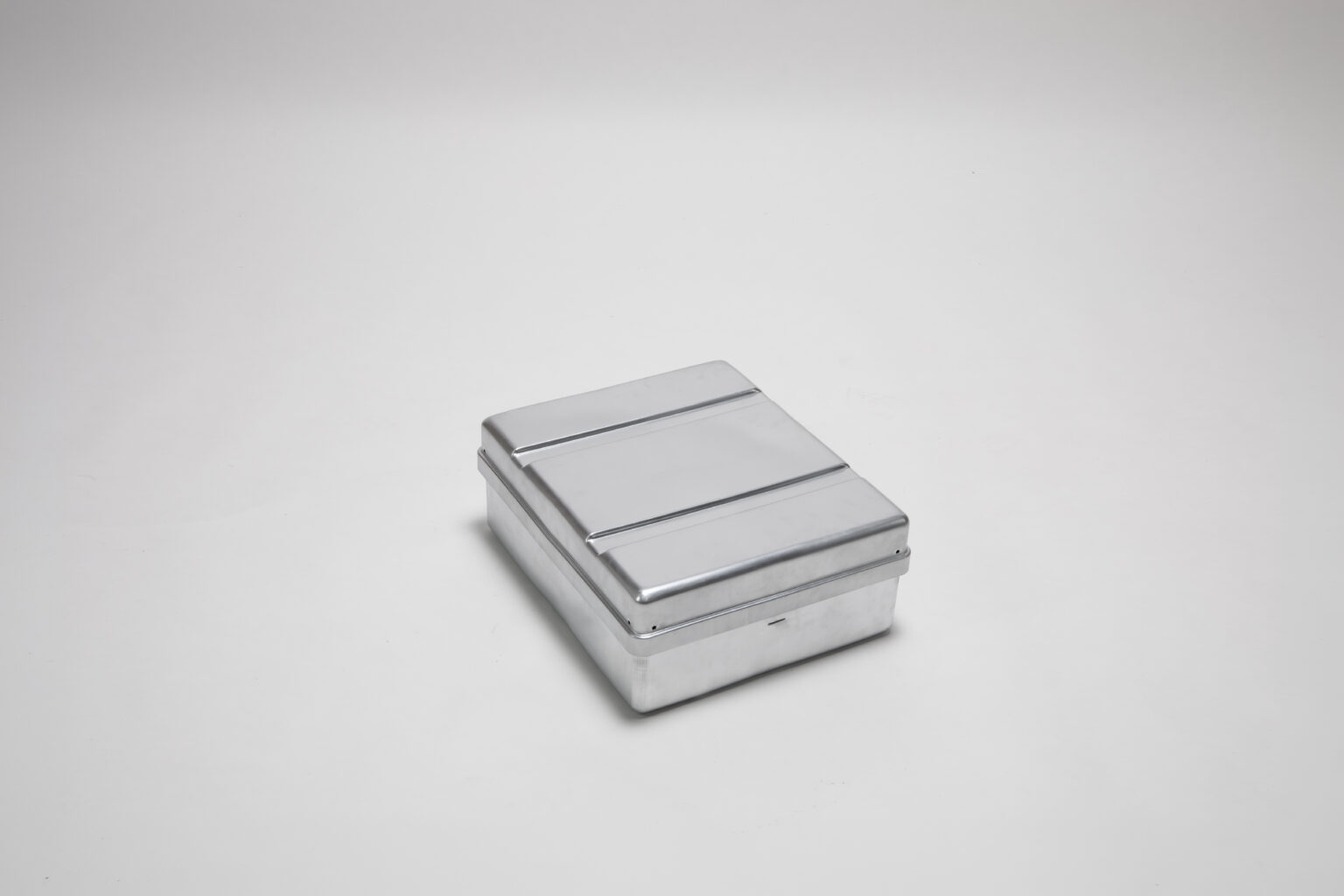
Easy disassembly offers advantages beyond repair and material separation. It enables more compact shipping and storage, reducing volume throughout the product’s life.
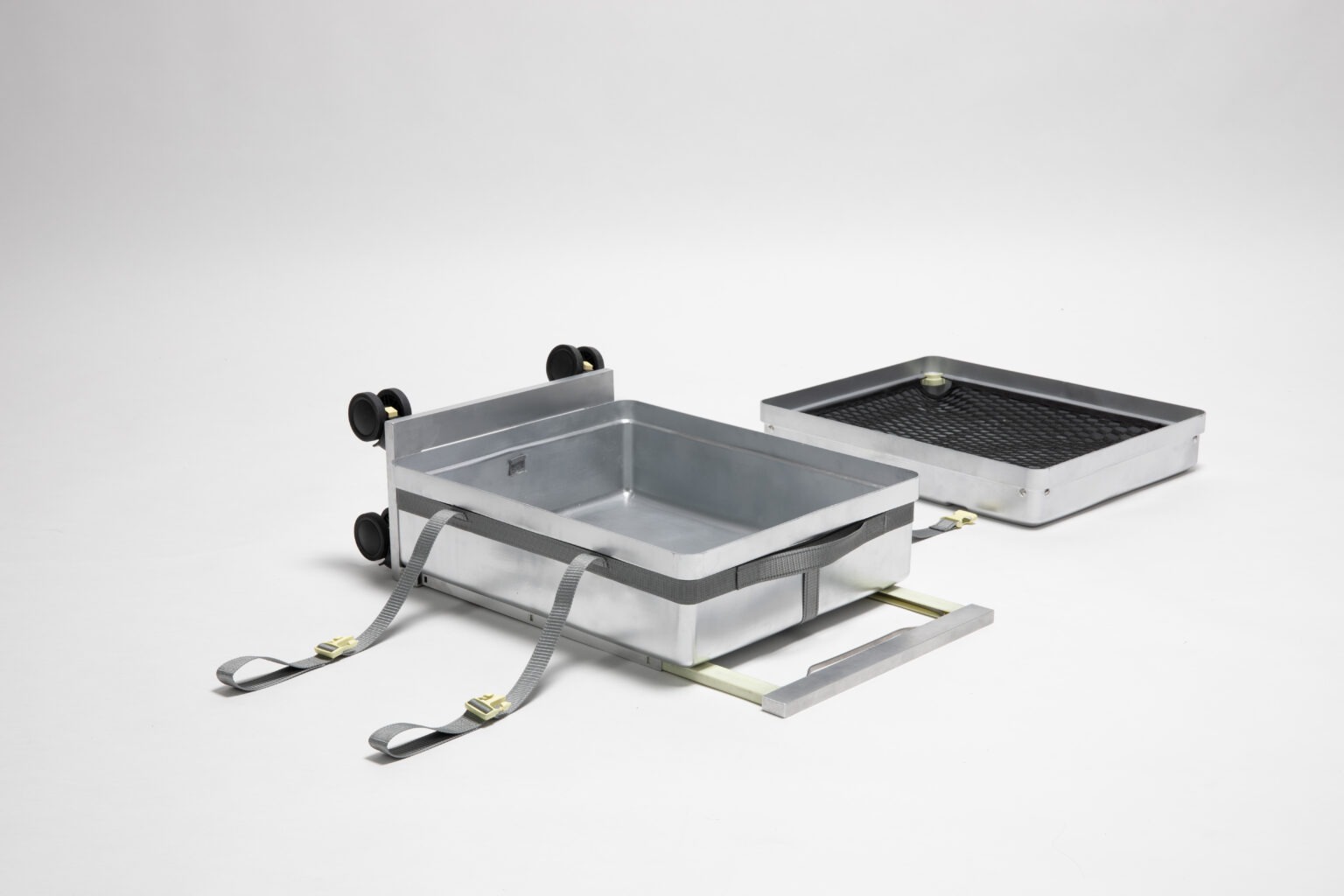
Additionally, it changes how the suitcase is used at the destination. The two shells can be separated from the trolley and function as independent storage boxes. They can be stacked, moved individually, or placed wherever it is most convenient within an accommodation. Instead of remaining a bulky object in the room, the suitcase becomes a flexible storage system that adapts to the user’s space and needs.
.